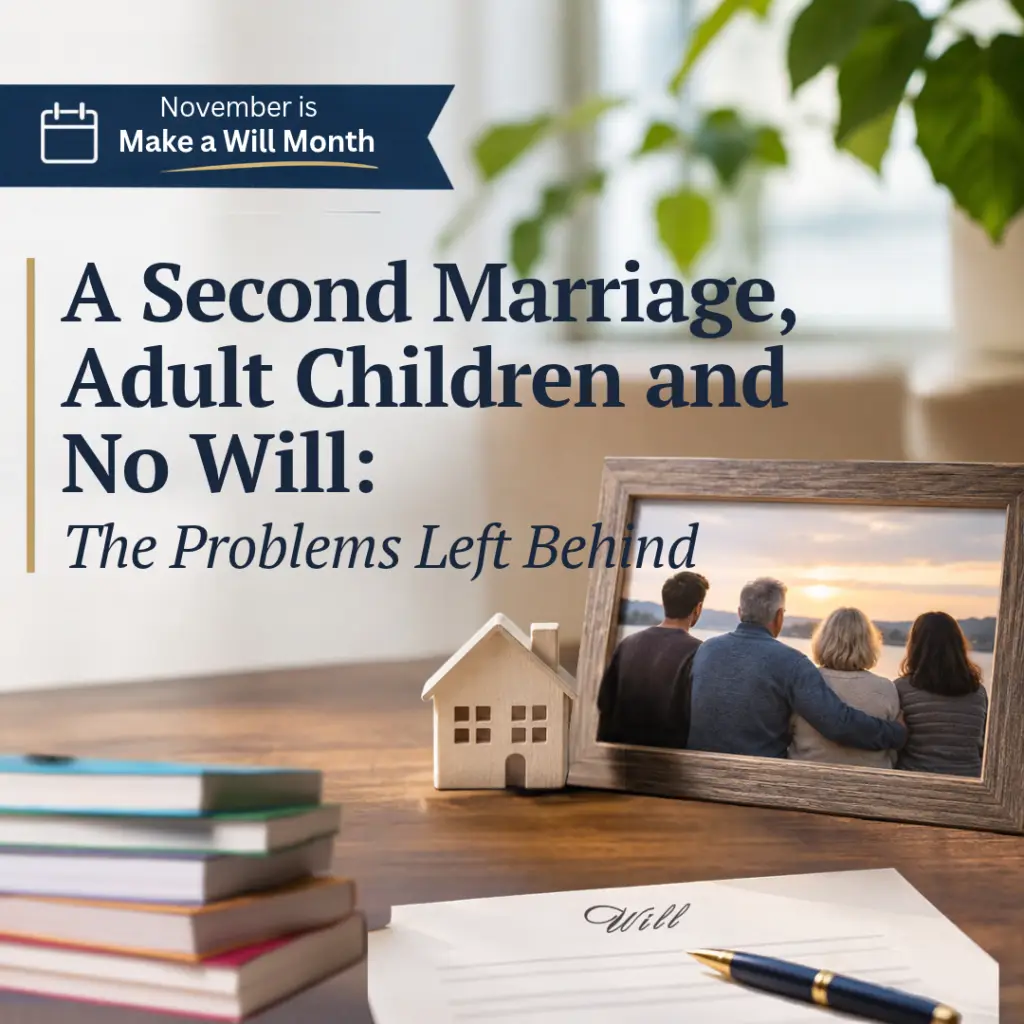
When someone dies leaving a second spouse and adult children from their first marriage, the family is already dealing with a difficult loss. If there is no will, they may also discover that their expectations about the home, inheritance and who will manage the estate are very different. Those differences can quickly turn into conflict.
In Ontario, a surviving married spouse does not necessarily inherit everything. Where the deceased leaves a spouse and children, the spouse generally receives the first $350,000.00 of the net estate. If there are two or more children, the spouse receives one-third of the remaining estate, and the children share the other two-thirds. Being an adult does not remove a child’s entitlement. If the net estate does not exceed $350,000.00; however, the children generally receive nothing under these rules.
This can come as a shock to everyone involved. The surviving spouse may have assumed they would have enough money to maintain their lifestyle. The children may have understood that assets accumulated during their parents’ marriage would eventually come to them. The statutory distribution does not adjust itself to reflect those family expectations or informal promises.
The home can become a particular source of difficulty. If the deceased’s interest forms part of the estate and there is little available cash, paying expenses and distributing inheritances may create pressure to sell or refinance. If the home instead passes to the surviving spouse through joint ownership, the children may have no entitlement to it through the estate. Title and beneficiary designations matter, and a will alone does not control every asset.
There can also be disagreement about who should administer the estate, how quickly property should be sold and who should receive sentimental belongings. Without a named executor, a court appointment is generally needed to administer the estate. Disputes can increase costs, delay administration and damage relationships that were already fragile.
Proper planning could have addressed many of these concerns. A carefully prepared will can name an appropriate executor, identify specific gifts and establish arrangements to support a spouse while preserving an inheritance for children. Depending on the circumstances, a trust or a carefully drafted right to occupy the home may help balance those interests.
The plan should also address insurance, beneficiary designations, property ownership and existing family law obligations. A surviving spouse’s equalization rights and potential dependant support claims must be considered. Making a will cannot guarantee there will never be a dispute, but leaving clear, legally effective instructions gives your family much less to argue about.
If you have remarried and have children from an earlier relationship, do not assume everyone understands what you intend. Put those intentions into a properly considered estate plan.
Every blended family is different. Thoughtful planning can help you provide for your spouse, make your intentions clear for your children and reduce uncertainty for those you leave behind.
Our wills and estates and family law teams at The Ross Firm can help you consider how your estate plan, property ownership and family law arrangements fit together.
To arrange a consultation about your will or estate plan, contact [email protected]. For advice about marriage contracts or related family law matters, contact [email protected].
Disclaimer: This blog post is for information purposes only and does not constitute legal advice. We recommend obtaining legal advice specific to your circumstances.