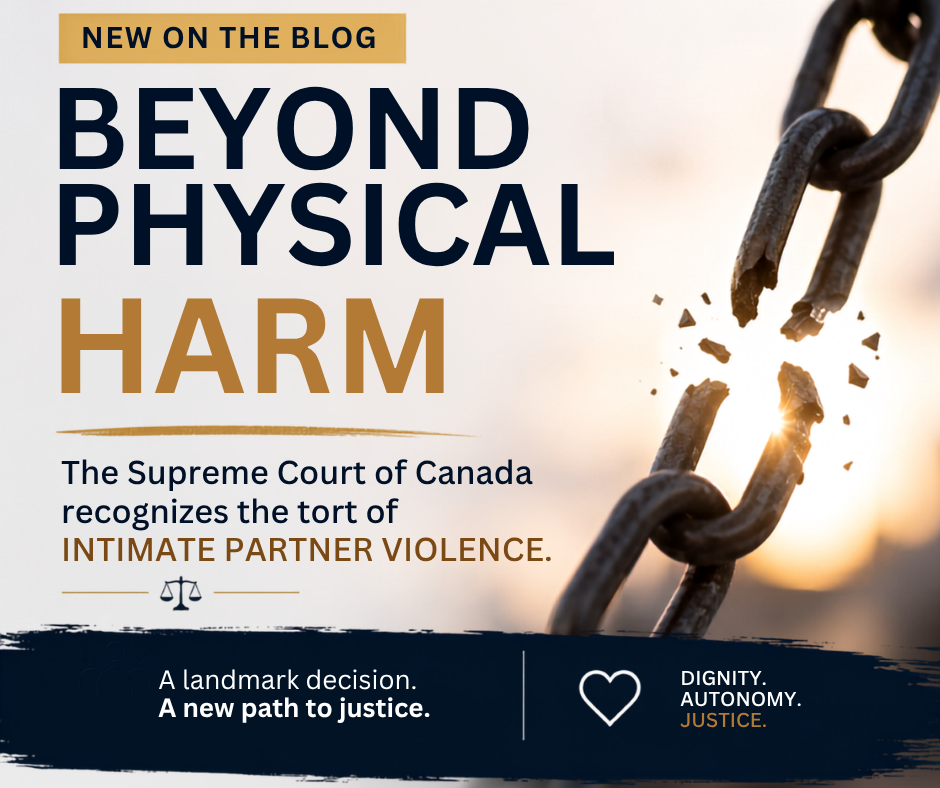
On May 15, 2026, the Supreme Court of Canada made legal history by recognizing the tort of intimate partner violence, a landmark decision that acknowledges coercive control and patterns of abuse as a standalone civil wrong.
For many survivors, the harm they endured extended far beyond physical injuries. This groundbreaking ruling gives courts a new way to recognize the devastating effects of coercive control, including financial abuse, isolation, intimidation, and the erosion of personal autonomy.
What does this decision mean for survivors and for family law in Ontario? Our latest blog explains why *Ahluwalia v. Ahluwalia* is one of the most significant developments in Canadian family law in decades, and what it could mean for those navigating high-conflict separations.